
As America’s virtual treatment provider for concerning use of technology we have borne witness to the rise of problematic behaviors regarding online gambling, gaming, trading, pornography, social media, shopping, and even growing dependencies involving artificial intelligence (AI). People aren’t surprised to hear about this phenomenon. However, there is another emerging issue regarding behaviors in this new digitized world, something that has been spoken about in a joking manner around the watercolor, but is now a behavior Americans are actively seeking support for. In each major U.S. city, hundreds-to-thousands of citizens are taking to Google and specifically entering “binge watching addiction” and “streaming addiction” in addition to semantically related expressions such as “addicted amazon prime” and “addicted netflix streaming” into their search browsers. In many cases, states are seeing dramatic quarterly and annual growth in demand for help. As an example, note the following snapshot of Google search data (taken Jan 15, 2025) for the city of Los Angeles, California:
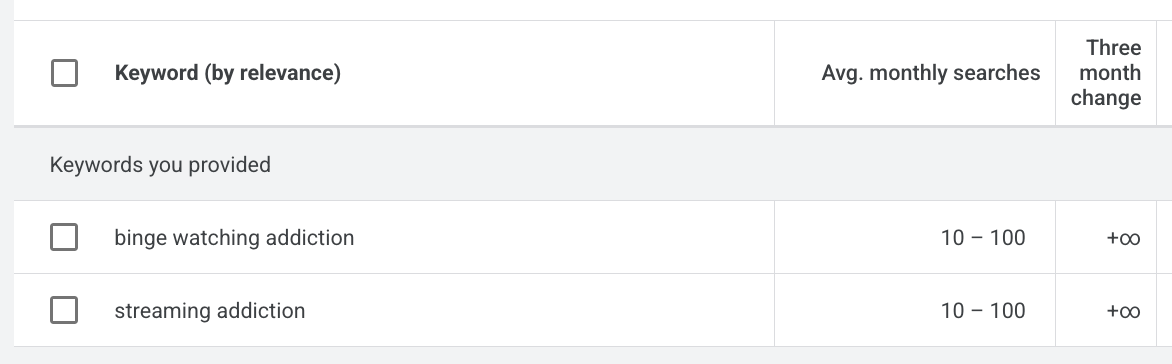
“+ ∞” (positive infinity) appended to any phrase indicates a significant-to-extremely high positive growth in search volume.
This measured data from Google is the tip of the iceberg, as Americans also reach out for insight and support for “binge watching addiction” (et cetera) on ChatGPT and various other AI assistants.
In response to this outreach, Kindbridge has put together a brief overview of the issue complete with a call to action. Please keep reading.
Overview of Problematic Behavior Surrounding Binge Watching and What Can Be Done to Return to Healthier Content Streaming
Symptoms of Unhealthy Binge Watching Behavior
By definition, binge-watching is the practice of watching multiple episodes of a TV series, or several movies, in one sitting or over a period, often with minimal breaks, although the term is now ubiquitously used to describe behaviors related to various digital content consumption “marathons”. The phenomenon started with the inception of Netflix and has expanded with the arrival of other streaming services such as Amazon Prime and Hulu. For most, binge watching is a relatively harmless and enjoyable entertainment habit, but can lead to health concerns for a number of vulnerable individuals. Do you suspect that you have a problem? Below is a summary of signs that intervention may be required.
Symptoms of binge watching addiction:
- You spend beyond your entertainment budget and/or financial means for subscriptions to multiple content streaming platforms (Netflix, Amazon Prime, HBO Max, Hulu, Paramount +, Disney +, Peacock, etc.).
- You neglect spending valuable time with friends and family in order to stream content.
- Large periods of time (multiple hours) pass while steaming content without you realizing it.
- You get anxious and stressed when you can’t decide what to watch next after concluding a series or movie.
- You delay much needed sleep, or disrupt your sleep (wake up and watch) to stream more content.
- Your physical health suffers due to long periods of inactivity and/or unhealthy food consumption associated with binge watching.
- You get irritable, restless, or anxious when not able to stream content.
- You get irritable or angry when questioned by loved ones about how much time you spend streaming content.
- When attempting to abate loved one concerns about your binge watching behavior (as per above) you hide your viewing by escaping to a private space in the home (restroom, bedroom, etc.) to stream content from your phone/tablet.
- You get distracted from and neglect household duties to stream content.
- You stream entertainment content in inappropriate places, such as in the workplace.
- Your professional productivity has suffered from the amount of time spent binge watching content.
- You have attempted to control, cut down, or stop (for a period) streaming content without success.
- You binge watch as a means to cope with and escape negative feelings (more on this below).
Binge Watching as a Coping Mechanism?
We concluded the above list of binge watching addiction symptoms with one that requires personal introspection. Do you sit down to stream content to escape feelings of stress, anxiety, depression, anger, irritability, or other negative emotions? If so, you are essentially using binge watching as a coping mechanism.
Binge watching as a coping mechanism is problematic. The activity significantly increases dopamine, the brain’s “feel-good” chemical, creating a pleasure cycle similar to addiction that makes it hard to stop. This release is connected to why streaming services employ cliffhangers (an ending to an episode that leaves the audience in suspense) and why the activity can become compulsive, impacting mood and impulse control. When not streaming content, you may experience a dopamine crash, and experience fatigue along with elevated negative feelings that you are attempting to escape in the first place. The brain craves more of the reward and over time binge watching must increase in volume and intensity to attain the same level of dopamine release that once required less content viewing. A viscous cycle ensues without intervention.
Issues That Cooccur with Unhealthy Binge Watching
As with all other digital dependencies treated by our virtual counseling platform, unhealthy binge watching behavior tends to cooccur with various mental and behavioral health issues. Recent studies reported on by the National Library of Medicine, Science Direct, and other resources that provide access to full-text scientific, technical, and medical (STM) research indicate that the following appear to cooccur with unhealthy binge watching:
| ADHD | Anger and Irritability |
| Anxiety | Bipolar Disorder |
| Chronic Stress | Depression |
| Eating Disorders | Impulsivity |
| OCD | PTSD |
Understanding this better informs intervention strategies which we address in the next section.
How to Correct Binge Watching Behavior
I. Practical Steps to Get Started
There are practical things that an individual can initiate right away that can set them on the path towards healthier streaming habits. These include the following:
- Download a subscription manager app such as Monarch Money or Rocket Money. These are tools that help individuals track and control recurring payments for content streaming subscription services like Netflix, Amazon Prime, and the rest. They offer features to find hidden costs, get alerts for renewals, provide insights into spending patterns, and can even cancel unwanted services for you. Seeing all of your costly subscriptions laid out on one dashboard can serve as a much needed reality check that can motivate you to cancel subscriptions and take a break.
- Turn off autoplay features on all of your content streaming services. When enabled, the platforms keep you engaged for longer than planned.
- Schedule a reminder on your phone or home’s virtual assistant that will alert you to when to stop streaming and get back to other duties or healthier activities.
- Make streaming a reward system, in that you only allow yourself to watch a show after you have completed a productive task, be it a workplace project, a workout at the gym, or quality time (outdoors?) with family.
II. Counseling for Sustainably Healthier Consumption
Content streaming services may one day add self-exclusion features (like with online gambling) to their platforms. Until then (or in addition to) those who self-report as having binge watching addiction need a helping hand from a support provider that is qualified in treating digital dependencies and issues that cooccur with them. This unique mental and behavioral health offering is available here and now through Kindbridge Behavioral Health. Our counselors are trained in treating individuals, couples, and households that have been negatively impacted by unhealthy behaviors that have been enabled by unchecked growth in technology. At the same time, we leverage tech to support the vulnerable public, connecting you to counselors by-phone and online, when convenient for YOU. Call or click the image below to get started!