

According to the Business of Apps, eBay has approximately 132 to 135 million active users worldwide, with the United States representing its largest market at nearly one-third of the user base. The online marketplace plays a notable, mainly supplemental, role in contributing to the income of many American households through “re-commerce” (selling pre-owned items) and small business operations. From a buyer perspective, eBay provides an opportunity to secure sentimental treasures, curate vintage items for personal collections, and find special gifts for loved ones that are not readily available anywhere else. The browsing and buying aspect can also be highly entertaining.
The vast majority of users are able to enjoy and leverage eBay in a healthy manner. However, as with all other web-enabled platforms that have been carefully designed to grow user engagement and spending, it does foster an environment for addictive behavior for those who have vulnerabilities. As someone who arrived here after searching “addicted to eBay”, you may be among the latter. Below is a summary of who may be more susceptible and what else you need to know about a perceived addiction to eBay.
Overview of Addictive Behavior Relating to the eBay Online Shopping Platform
I. Addicted to eBay Shopping?
a) Shopping Disorder / Compulsive Buying Disorder
A perceived addiction to eBay may be connected to compulsive buying disorder (CBD). CBD, or shopping disorder, is a behavioral health addiction characterized by an irresistible, repetitive, and excessive urge to shop, resulting in a variety of negative consequences. The digital shopping experience has been meticulously designed to commandeer the brain’s reward system, complete with microtransactions (view more), limited-time offers, flash sales, endless browsing, and enticing audio-visual signals. Online shopping (on eBay or elsewhere) is engineered to act as a “dopamine loop”, creating a continuous cycle of anticipation, reward, and craving that mimics addictive behavior. The brain releases dopamine not just when completing a purchase, but during the anticipation of a reward, such as browsing for items and waiting for a package to arrive in one’s mailbox.
Signs of Unhealthy Shopping Behavior (eBay or otherwise)
If someone exhibits a combination of three or more of the following behaviors, therapeutic intervention is likely required:
- An individual is in debt or experiences severe financial strain due to online shopping.
- An individual often buys things online that they don’t need and/or can’t afford.
- An Individual lies to loved ones about online purchases and/or the prices of items purchased online.
- An Individual lies to loved ones about online shopping when they have indicated that they are going to take a break.
- An Individual gives in to the uncontrollable urge to browse listings and check bidding (specific to eBay) updates frequently through the day.
- An Individual gets irritable, restless, or anxious when not able to get online and check their preferred online shopping platforms.
- An Individual feels unsettled when there is no access to the internet, if one of their preferred online shopping platforms is down, or functions slower than usual.
- An Individual uses their phone to access online shopping when not safe, such as when operating a motor vehicle or while on the treadmill at the gym.
- An Individual shops online when not appropriate, such as at work.
- An Individual shops online as a means to cope with and escape negative feelings.
- An individual feels guilty or regretful after online shopping.
- An Individual has attempted to control or cut down on online shopping without success.
Issues that Cooccur with Unhealthy Online Shopping Behavior
Problematic online shopping is known to cooccur with various mental health issues, often as a maladaptive coping mechanism. Those who live with one or more of the following may be more likely to develop unhealthy behavior on eBay:
| Anxiety | Depression |
| Low Self Esteem | Eating Disorders |
| ADHD | Bipolar Disorder |
| OCD | PTSD |
b) Uncertainty Component
Those who have pinpointed eBay as being the vessel for their addiction may have developed the same compulsion towards other online shopping platforms. However, beyond the “Buy it Now” option, eBay’s auction/bidding feature adds an element of uncertainty and excitement that may fuel addictive behavior. The anticipation of winning a bid on an item can trigger dopamine responses that function in a manner similar to casino gaming and sports betting. Click here to better understand the dopamine-gambling connection, which will provide clarity on how it relates to eBay auctions.
c) Competitive Component
Contrary to other online shopping platforms that are generally female-dominated, over 60% of eBay users are male. This adds a layer of complexity to assessing for addictive behavior, because the issue may not be related to shopping disorder or CBD, but to eBay’s competitive environment. On average, males exhibit more competitive behavior than women. As discussed in the section above, eBay was built on its auction integration. Items are available as time-limited listings (1–10 days) where sellers set starting prices and buyers bid against each other, with the highest bidders winning items at the end of each auction. Sensation seekers, individuals with high neuroticism, individuals whose self-worth is solely tied to their performance (those with a strong athletic/professional identity), and people with low-patience and high-impulsivity are more prone to developing an intense, uncontrollable urge to win or outperform others on eBay. The behavior is driven by a desire for dopamine-fueled validation, similar to problem gambling or substance abuse.
II. Addicted to eBay Selling?
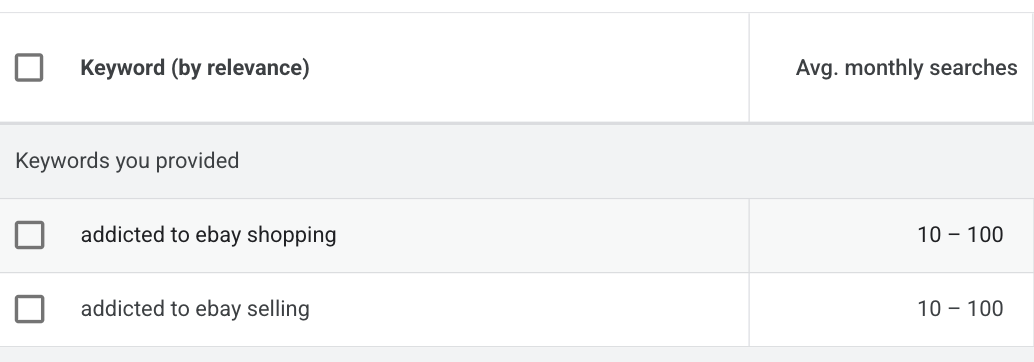
According to search data compiled by Google / Gemini AI, an equal number of people search “addicted to eBay selling” as “addicted to eBay shopping”:
Selling things, much like buying them, triggers a significant dopamine rush. This chemical reaction is rooted in the anticipation and completion of a rewarding experience that is not dissimilar to gambling activities. The gambling connection is even more evident on eBay where the uncertainty of the sale price (for auction items) or the speed of the sale creates a high. The brain releases dopamine not just when the item is sold, but during the anticipation leading up to the sale, such as waiting for a bid or watching an item get attention. This is reinforced for re-commerce sellers on eBay via audible and animated notifications on their phones or computers when a sale is confirmed. Furthermore, selling on eBay, particularly items that an individual has thoughtfully curated, provides a sense of accomplishment and validation that stimulates the brain’s reward centers.
While the consequences appear less dire when compared to a perceived addiction to eBay shopping (which can lead to financial ruin), selling can become addictive. This addictive behavior may not just come with many of the same negative signs and symptoms of problematic shopping (see above) it may lead an individual to sell possessions (including those of others in a shared household) that they may regret.
If your behavior on eBay or any other online marketplace is having a negative impact on your wellbeing, it’s time to bid on your mental health. Connect to a virtual counselor who specializes in the treatment of digital dependencies, including those related to shopping platforms. Reach out via your preferred form of contact below.