

Data from Google / Gemini AI indicates that each month, thousands of business owners and corporate executives across the United States perform an online query for “treat your employees well”. It’s both an affirmation statement and form of outreach for insight into how there’s room for improvement. This is backed by recent research conducted by Deloitte, which confirms that the vast majority of corporate executives report that they want to and are actively trying to treat their employees better. 84% of executives report that their company is actively engaged in improving culture, with 83% stating that they plan to improve or expand their organization’s well-being initiatives over the next one to two years. The goal to improve employee treatment is not only rooted in morality, but for business performance. The same body of research referenced above shows that workplaces with high employee satisfaction see three-times higher revenue growth and 50% less turnover.
While forward-thinking corporate leaders are investing in wellness programs for their teams (for example) today’s feature asks that they consider their own mental and behavioral health as being a key component to today’s stated goal. If a greater number of executives engaged in accessible virtual counseling services, they would become healthier individuals who are better positioned to empathize with and empower their teams. Read ahead to learn more.
How Virtual Counseling Can Help Corporate Leaders Better Empower Employees
Addresses Executive Mental Health Issues That Harm Employee Relations
There are mental health concerns that are relatively common to business owners/executives that can lead to (or are related to) issues with anger, irritability, and other reactions that compromise positive interactions with the team. Further, managers may turn to unhealthy activities such as substance use and online gambling to cope with negative feelings, which can lead to addictive behavior and build another barrier to a positive corporate environment. In recognizing these mental health concerns, executives can take corrective action.
i) Burnout: Burnout is often the result of continual and compounding demands of being a high level executive. Research shows that between 50% and 82% of senior leaders experience burnout. Common signs and symptoms leaders may experience include (but are not exclusive to) chronic fatigue, high blood pressure, physical and cognitive impairment in addition to moodiness, anger, and irritability. The latter trifecta (moodiness, anger, and irritability) can have a direct impact on how a leader treats their employees.
ii) Anxiety: Executive anxiety has spiked significantly over recent years, with 27% of surveyed corporate leaders reporting symptoms of an anxiety disorder. Corporate leader anxiety is frequently masked by, and expressed as, anger and irritation, often serving as a dysfunctional coping mechanism to reestablish a sense of control in high-stakes environments. As with burnout, this often manifests as fatigue and irritability, which can lead to a dysfunctional, fear-driven leadership style that does not support employee wellness.
iii) Depression: Recent studies find that 26% of executives report symptoms consistent with clinical depression, compared to 18% in the general workforce. Corporate leader depression is frequently linked to, and masked by, heightened anger, irritability, and impatience with employees. While often mistaken for a high-powered, demanding management style, these intense, erratic, and sometimes aggressive interactions can be manifestations of underlying depression that is often exacerbated by the high-stress, lonely, and relentless demands of an executive role.
iv) Chronic Stress: Stress is generally considered an inescapable part of a corporate leader’s role. However, chronic stress appears to be escalating with current economic and sociopolitical uncertainty. Recent surveys find that 67% of executives report feeling more stressed than the previous year. Corporate leader stress has a direct and detrimental impact on employee engagement, creating a, “trickle-down” effect of negativity and poor performance throughout an organization. When leaders struggle to manage their own stress, their behavior often becomes “toxic” or disengaged, leading to a significant drop in employee motivation and productivity.
Regular engagement with a virtual counselor who is qualified to treat these concerns will provide executives with the skills and tools to needed manage their thoughts, feelings, emotions, and behavior in a healthy and productive manner. Click here to view more on executives and mental health issues they struggle with.
Increases Awareness About What Others Are Going Through
Corporate leaders and the members of their teams are often experiencing the same mental health issues in varying degrees.
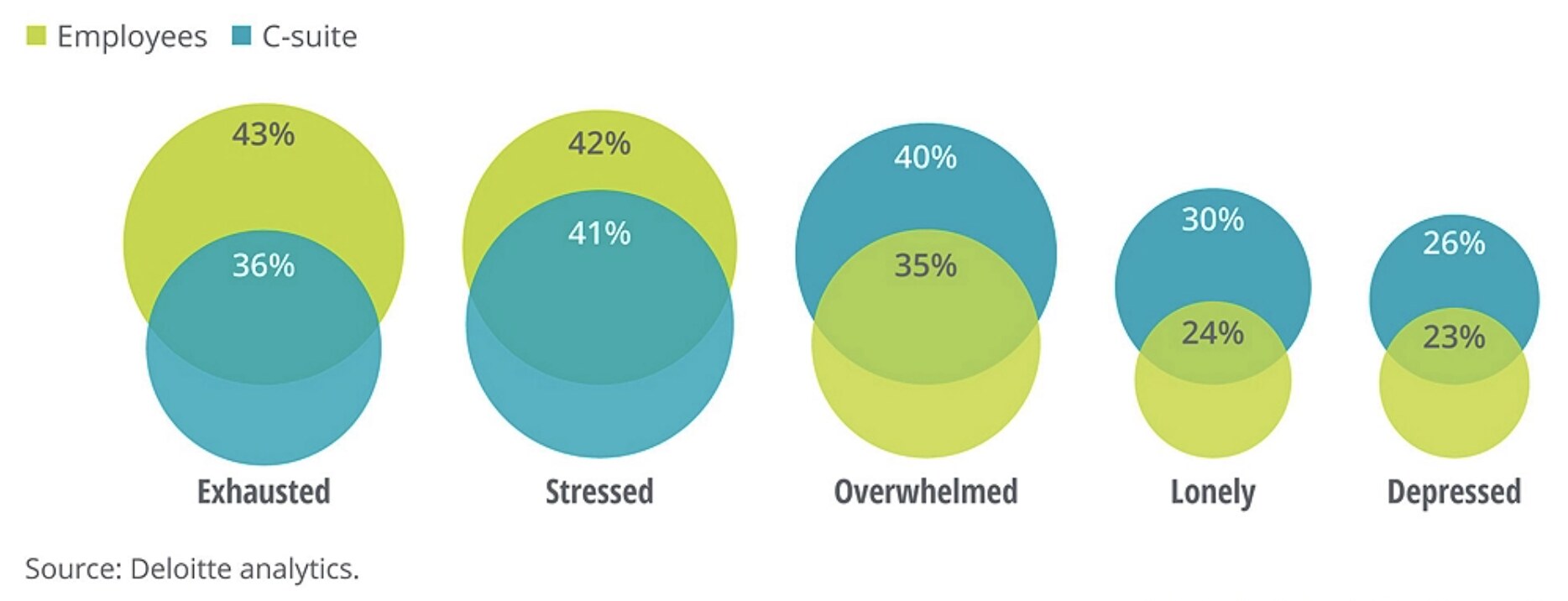
When corporate leaders engage in counseling, there is a significantly increased awareness of others’ feelings, emotions, and mental wellbeing. Therapy often serves as a foundational tool for enhancing emotional intelligence (EQ) within executives. High scores of corporate leader EQ is strongly associated with the improved treatment of employees, directly fostering a more positive, supportive, and respectful work environment. Leaders with high EQ are better equipped to recognize, understand, and manage their own emotions and those of their team members, which typically leads to higher satisfaction, lower turnover, and improved productivity.
Treat your employees well by treating yourself well. Kindbridge Behavioral Health works with cooperate leaders from a wide variety of industries, with counseling subscriptions (view here) that are covered by most insurance plans (here). Connect to a counselor today via your preferred form of contact below.