

There is a new phenomenon in the public health space that coincides with the ubiquitous use of artificial intelligence (AI) in nearly every profession in the United States – AI job anxiety. It is a term used to reference the stress, fear, and uncertainty the labor force (workers, professionals, et cetera) feel about AI potentially making their skills obsolete, displacing them from their jobs, or fundamentally changing the nature of work. The anxiety often stems from rapid technological change and concerns about job security, skill relevance, ethical impacts, and privacy. It manifests as worry and stress about job loss and subsequent resistance to adopting AI tools.
Ironically, AI job anxiety started manifesting among the tech sector workforce. It’s easy to draw a direct line between career security fears and the application of AI to automate many duties that coders, software developers, and graphic designers were traditionally depended upon for. However, AI has spilled into all industries in some shape or form, and this has a growing proportion of the population experiencing complex emotions. For instance, for decades, millions of Americans were told that trades such as plumbing, electrical, and HVAC offered lucrative stability amidst uncertain times. The demand for skilled trades has long been highly inelastic, due to urgent, structural shortages in sectors like construction, manufacturing, and infrastructure, which are exacerbated by an aging workforce and specialized training requirements. But now, even current and prospective tradespersons are concerned about what professional life will look like in two years, much less a decade from now. This concern is exhibited by growth in online search for answers. Below is a snapshot from Google’s keyword research tool which uncovers state-by-state search for “will ai take over hvac” (as an example):
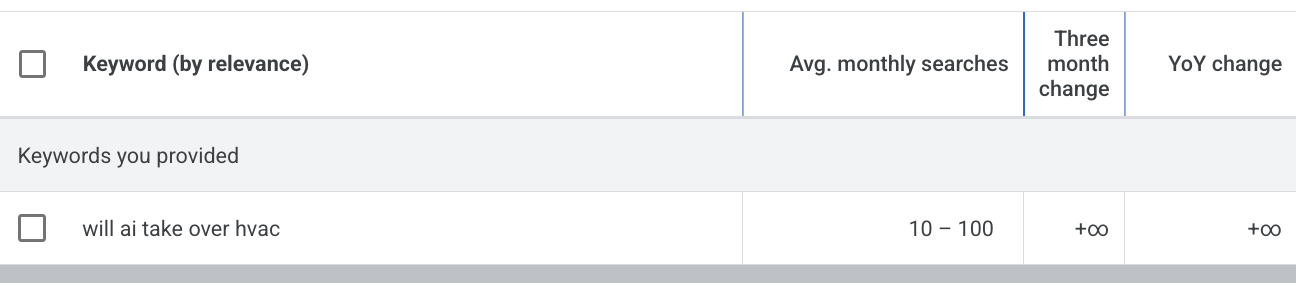
The symbol “+ ∞” (positive infinity) appended to any phrase indicates a significant-to-extremely high positive growth in search volume.
We also look to Google Trends as a holistic gauge of American sentiment. As of January 2026, Google Trends integrated Gemini AI to improve search analysis. The relationship between Google Trends and AI on Google Search is now bidirectional, with Gemini directly integrated into the Trends platform. When analyzing American sentiment about AI’s integration into the workforce, we unveil the following pattern for the last annum:
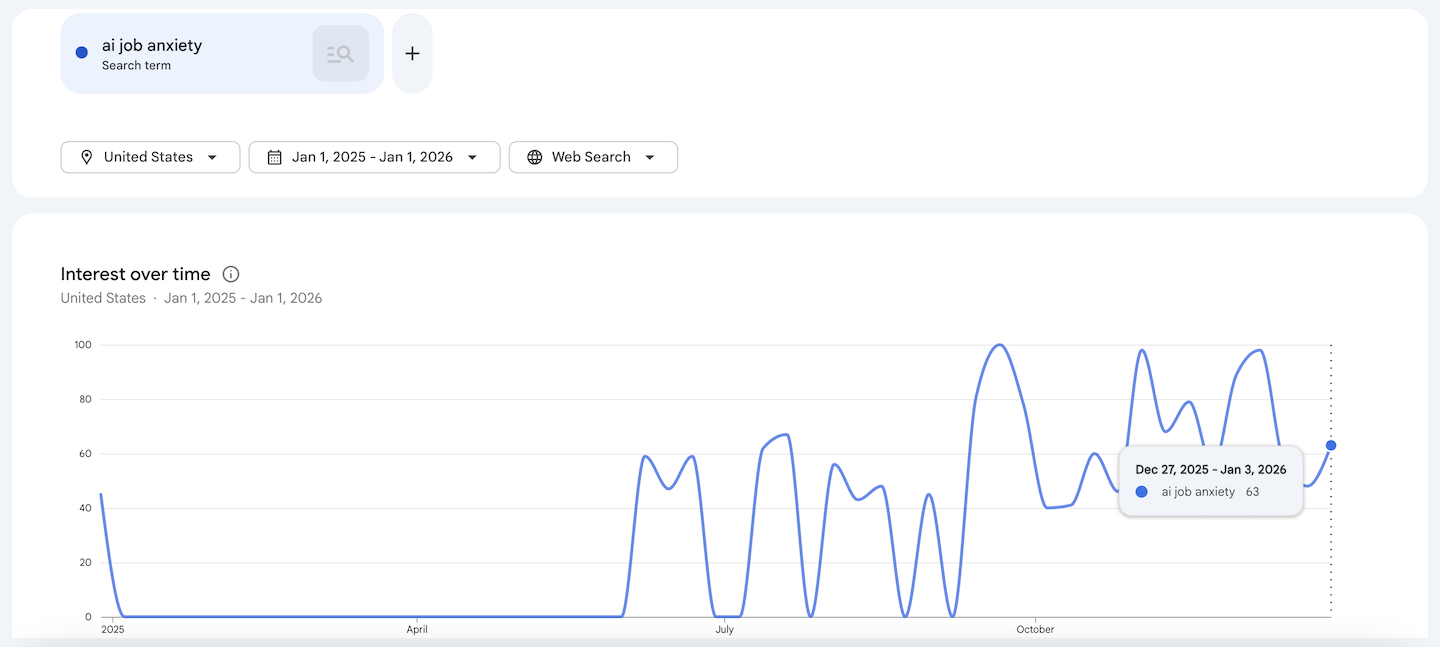
*Values between 0 and 100 indicate the “popularity” for a given search expression and semantically related search expressions.
Interestingly, the mid-year spike (that has essentially sustained ever since) occurred within a day of various announcements regarding organizational AI adoption. On June 2, 2025, the U.S. FDA announced the launch of Elsa, a generative Artificial Intelligence (AI) tool designed to help employees – from scientific reviewers to investigators – work more efficiently, modernizing agency functions and leveraging AI capabilities “to better serve the American people”. A week later, an Amazon announcement confirmed that layoffs due to redundancies created by AI were highly likely.
But we digress.
Instead of continuing on about why the American workforce is in the throughs of AI job anxiety, we want to address a potentially greater mental health concern. Many are on the verge of making impulsive choices without fully considering the potential consequences or gathering all the necessary information. These choices are often driven by strong emotions like anxiety and stress, leading to regrettable outcomes because important factors were overlooked. We suggest that AI job anxiety is sending (and will send) thousands of Americans down a dangerous path in search of alternative means to sustain a living that don’t align with their wellbeing. Have you arrived here after seeking insight into your own fears about career stability in the era of AI? If so, you absolutely need to read ahead.
Overview of How AI Job Anxiety May Lead to Rash Decisions About How to Earn a Living
Desperate Search for How to Make Money Online
Another irony at play, is that growth in anxiety over how technology may overtake one’s livelihood cooccurs with growth in search for how to make money online. Google Trends / Gemini AI search confirms that the popularity of this query and semantically related expressions remains consistently high across the nation:
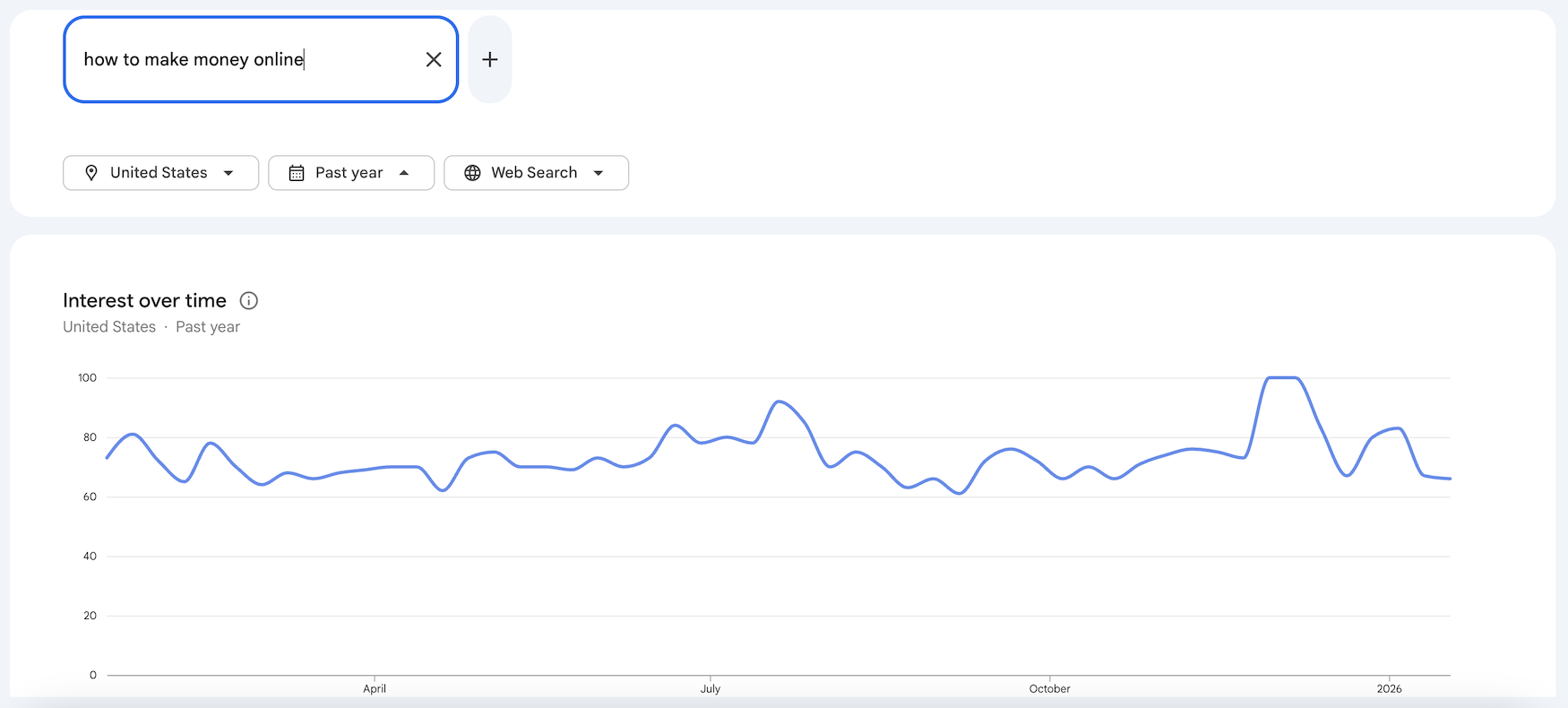
*Recall that values between 0 and 100 indicate on the “popularity” for a given search expression and semantically related search expressions.
The intent is generally rooted in a desire to make money in a relatively passive manner from home, and quickly but in a sustainable manner, before AI displaces them (as they see it). This search delivers a swath of Reddit discussions, YouTube solicitations, and sponsored ads all purporting to offer concerned citizens a way out of anxiety over income instability. This presents a problem.
Lack of Engagement in Meaningful Activities
Some of the feedback is valuable. For instance, if you are a skilled artisan / maker, starting an Etsy store can be both fulfilling and lucrative. Unfortunately, other suggested options prey on desperation and send people into income-earning prospects that don’t align with their personalities, ambitions, and passions. This is problematic from a mental health perspective. Research indicates that not working in a field that aligns with your passions, or engaging in work that offers no sense of purpose, is associated with a higher likelihood of experiencing symptoms of depression and lower life satisfaction. A key factor is anhedonia – a loss of interest or pleasure in daily activities – which is a primary symptom of depression and can be triggered by a lack of engagement in meaningful activities. Don’t trade one mental health concern (AI job anxiety) for another when deciding how to proceed in this new era.
Rationalizing High-Risk Income Activities
There’s another concerning trend among those seeking alternative means of earning income online in response the real or perceived (more on this below) threat of AI job displacement. Thousands of Americans, particularly adult males between the ages of 18-35, are turning their attention towards grey markets of online casino gaming, sports betting, day trading, and prediction markets.
Participation in these high risk / high reward activities can be problematic not just because they persist in a legal grey area in many U.S. states, but because those who think that they can sustain a living in them generally exhibit an illusion of control over outcomes. This illusion of control is known as a cognitive distortion. Cognitive distortions are irrational thoughts that are reinforced over time and are often tethered to habitual participation in an activity that is associated with harms for vulnerable persons. Those experiencing anxiety (which cooccurs with problem gambling and trading) frequently experience cognitive distortions relating to their participation in gambling and trading, which include the following:
- Belief in the gambler’s fallacy (also applies to day traders).
- Belief in the hot hand fallacy.
- Belief in the sunk cost fallacy.
- Belief that one has a winning strategy and skillset.
- Belief that some gambling operators have better odds than others.
- Belief that there are sustainable expert and insider picks.
- A tendency to remember the wins more than the losses.
View the specifics of each in this article on Cognitive Distortions in Gambling.
Compounding the concern, is that mainstream media perpetuates the belief that a world exists where they can earn a living engaged in these high-risk activities. Recent articles such as “They Quit Their Day Jobs to Bet on Current Events. A Look Inside the Prediction Market Mania“ may touch on risks in the fine print, but all that someone experiencing AI job anxiety may read is the headline. That’s enough to rationalize walking away from their current place of employment to impulsively chase more exciting prospects. After all, their “peers” are already doing so, and blasting it out on social media to make it all the more enticing.
The unfortunate reality is that every supposed strategy, be it steeped in myth of gambling bankroll management (dispelled here) or that falling stocks always rebound, fails for the majority. Meanwhile, those who struggle with underlying mental health issues (including anxiety) and choose to participate in online gambling, day trading, and prediction markets put their wellness and that of their households at risk.
What You Need to Do
Take an Inventory, and a Breather
Take an inventory of your feelings and emotions. Is it possible that you have conjured irrational, negative thought patterns like catastrophizing (expecting the worst), mind-reading (assuming negative intentions from your employer), and overgeneralizing (seeing an isolated event – such as one employee being laid off – as a pattern) that fuel anxiety and make situations seem more threatening and uncontrollable than they are? These distorted thoughts create a cycle of heightened worry and distress.
When AI job anxiety creeps in, practice deep breathing. Breathing exercises such as diaphragmatic breathing can stimulate the release of your brain’s feel good hormone – dopamine – and help reset your brain in a positive direction. Here are the general directions:
- Sit or lie-down in a comfortable space and close your eyes.
- Place one hand on your chest and the other hand on your abdomen.
- Inhale through your nose for approximately 4-seconds as you feel your abdomen expand.
- Hold your breath for 2-seconds, then exhale slowly and steadily through your mouth for about 6-seconds.
- Repeat the process from anywhere between 5 and 15 minutes. Your mind and body will let you know when you have calmed down sufficiently to move on to the next step.
With a calmer lens, you may instead see ways that AI may augment your role, versus outright automate it. This may free you up to focus on the more important “big picture” aspects of your job, letting it manage the mundane tasks that you once abhorred.
Connect to a Coach About Your Career
Every technological innovation to follow the late 18th to mid-19th century Industrial Revolution was met with workforce anxiety over income stability. And like with the Industrial Revolution, innovations through the remainder of the 19th, 20th, and early 21st century, they ultimately created more jobs than they eliminated, namely for those who adapted through education and training. Admittedly, no previously introduced technology has been poised to transform the economy and workforce as AI appears to be. While we’re not economists, and cannot determine whether your job will be automated or augmented, we can offer this practical tip – connect to a career coach.
A career coach can significantly help advance your skills by identifying gaps and developing strategies for improvement as they relate to your own adoption of AI in your current or desired occupation. At the same time, they will help you hone essential soft skills like leadership and interpersonal communication that AI can’t automate. Instead of being left behind, you will be armed with a new sense of confidence and poised to reach your professional goals, whether via a promotion or career change.
Connect to a Counselor About Your Anxiety and Fear
Overcome anxiety and fear about AI’s real or perceived impact on your livelihood, and avoid impulsive decisions, by working through your thoughts, feelings, and emotions with a counselor. Kindbridge Behavioral Health counselors are more uniquely qualified to support you in everything discussed here today. We not only treat those who struggle with anxiety, our counselors have expertise in intervention for problematic behaviors regarding involvement in high-risk income earning prospects that may compromise the health of vulnerable individuals and their households. This includes counseling to address issues with gambling, day trading, and prediction markets. Connect to a Kindbridge counselor today.